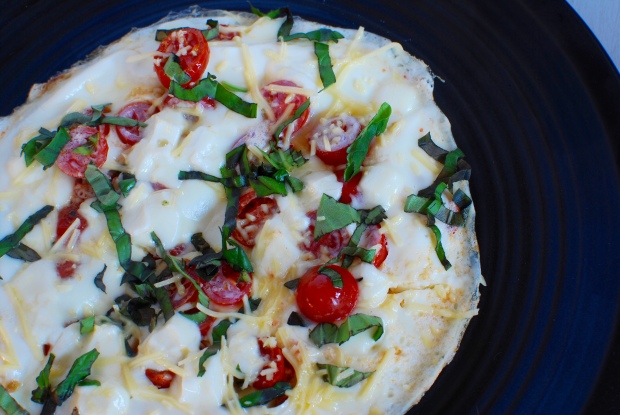
30 Minute Spaghetti Squash with Shrimp

I am not anti carbs or anti pasta by any means, but sometimes you need a nice satisfying lower carb meal option.  Especially this time of year when there is an overabundance of carb rich food everywhere you look.  That is where spaghetti squash comes in. In can be a great replacement for traditional noodles.

dsc_0577

Let’s keep something straight though, spaghetti squash does not taste exactly like noodles.  It has a little (non offensive) vegetal taste and it has a little more crunch to it then traditional noodles. Don’t get me wrong it is still delicious. I just don’t want anyone to make it and expect it to taste like regular wheat noodles and be disappointed.

One cup of spaghetti squash has only 42 calories and 10 grams of carbohydrates compared to once cup of traditional cooked noodles that have 221 calories and 43 grams of carbohydrates.  Making spaghetti squash a great substitute when you are trying to lower the overall calorie or carb amount of your meal (or you would rather get all those calories/carbs from somewhere else).

When it comes to cooking the squash there are many different ways you can do it. You can roast it in the oven, put it in the slow cooker or microwave it.  Microwaving is my personal favorite. It is quick and it makes cutting it easy.  No more failing around the kitchen with it stuck to end of your knife while you slam it on the counter.  (Please tell me I’m not the only one who has done that?!)

When you microwave it, make sure you stab it all over with a fork.  That will release the steam and prevent it from becoming a bomb in your microwave.  For a 2 ½ pound squash, it will need to cook for about 14 minutes. Turning over halfway through.  If your squash is larger it will need more time.  It is done when the outer skin is soft and easily pierced. After that, DO NOT take it out of the microwave.  Leave it in there, for another 10 minutes.  It will continue to steam on the inside.  (This is a great time to prep the rest of your meal.)
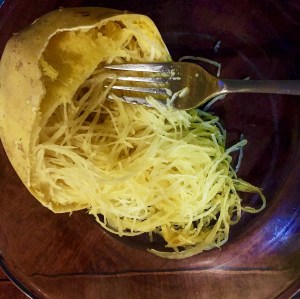
Spaghetti Squash

Cutting the squash in half width wise leads to longer noodles.

Once the 10 minutes is up, carefully remove the squash, it will still be hot.  Cut it in half width wise, not length wise like you have always been told!  When you cut it width wise you get nice long noodles, not the 2 inch ones. Gently scrape out the seeds and any loose pulp.  Since it is already cooked, you will not have to put too much man power into this.  Using a fork, gently pull the flesh out into a bowl and separate into strands.

If you don’t want to microwave it, you can cook it in the oven. Cut the squash in half, scoop out the seeds and place in a pan cut side down.  Place a small amount of water around the squash and bake at 400 for 35-45 mins.  Alternatively, you can cook it in your slow cooker too.  I have, however, yet to try this method. You need to pierce it all over with a fork and place whole in your slow cooker on low for 6-8 hrs.  It’s is done when it can be easily pierced with a knife.

Just about anything you can do with regular noodles you can do with spaghetti squash.  However, I prefer something lighter, like garlic, olive oil with shrimp.  In this recipe I used precook frozen shrimp because that it what I had on hand. You also could sub out precooked chicken breast. spaghetti-squash


Garlic Lemon Shrimp on top of Spaghetti Squash with Garlic and Olive Oil.

For the squash:

2 ½ pound spaghetti squash

2 Tb Olive oil

2 cloves Garlic, minced

¼ cup shredded parmesan

1 tsp red pepper flakes

1 tsp kosher salt

For the Shrimp:

4 cloves garlic, minced

1 Tb Olive oil

1.4 cup fresh lemon juice

½ tsp kosher salt

¼ tsp black pepper

1 ¼ precooked, defrosted peeled and deveined shrimp.


  • Prick the squash all over with a fork. And microwave for 6 minutes. Turnover and microwave for another 8 minutes. Let continue to steam in microwave for another 10 minutes.
  • While squash is cooking make the shrimp. Place garlic and oil in a large skillet and cook over medium heat for 1 minute.  Add lemon juice, salt and pepper.  Toss with Shrimp (or precooked chicken) and set aside.
  • When squash is done steaming, remove from microwave. Cut in half width wise and remove seeds. Using a fork pull out the flesh and separate into strands.
  • In the same skillet used to cook the shrimp heat the olive oil. Add garlic and cook for 1 minute.  Careful not to burn the garlic.
  • Add red pepper flakes (If make this for kids, you may want to omit this step. And top individually with red pepper) cook for 1 more minute.
  • Add cooked squash and toss. Season with salt and parmesan.
  • Toss in prepared shrimp. And serve.


Nutritional info for 5 shrimp and 1/4 the spaghetti squash

Calories: 297 Fat:13 Carbs:20 Pro:24

Adapted from Spaghetti Squash in Gina Homolka’s Skinnytaste Fast and Slow Cookbook.



7 Ways to Start a Gratitude Practice

I know thanksgiving is over, and you are sick of hearing about being thankful, but hear me out for a minute.  While expressing our gratitude over the holidays is all good and well, we need (yes, NEED) to be practicing it the other 365 days a year. I mean, don’t you want to feel more joy, happiness, and over all better wellbeing all year long? Scientific studies have shown that gratitude practice leads to:

  • More meaningful relationships
  • Increased productivity at work
  • Better physical health
  • Reduced depression
  • Increases happiness
  • Heighten sense of wellbeing
  • Increased over all enjoyment of one’s life
  • Increased hope and purpose
  • Increased empathy

A pretty good sales pitch for gratitude, right? But now how do you do it? Just like working out and healthy eating, we need to make gratitude a habit.  Here are 7 ways you can have more thankfulness in your day, pick one (or all).

img_9459

“There are many beautiful reasons to be HAPPY.” My gratitude journal.


  1. Gratitude journal. Yeah, you’ve heard this before. We all know we are supposed to write down 5 things we are thankful for.  But if you find yourself writing something along the lines of “I’m thankful for my significant other, my kids, my job, my dog… oh yeah and coffee” Then I encourage you to change it up a bit.  Pick just one topic and write 5 things about that topic you are thankful for.  For example here is one I wrote about my husband:

He supports me and all my crazy ideas.

He is a great father to our boys.He tells the best bed time stories to the boys, so I can have a few minutes alone every night.

He can grill one mean steak.

He is always encouraging me to be and do more.

He cleans my car for me (and if you know me you know this is HUGE).

2.  Acknowledge others. Truly listen to them and look them in eye.  And not just with your boss, do this with the barista at your coffee shop, your waitress, the kid who checks you in at the gym. Do this with every one you come in contact with.  Put down your phone, look them in the eye and honestly thank them.

3.  Show gratitude to yourself.  Seriously. Stop comparing yourself to others. Instead recognize what you have accomplished. When someone complements you, accept it.  If you feel uncomfortable just smile and say thank you. Do not try to talk them out of it or explain the compliment. Take the compliment.

4.  Make sure all your loved ones know you are grateful for them. Randomly pick one person a day, and make sure you let them know you are grateful for them.

5.  Send out hand written thank you notes.

6.  At least once a day, tell someone who is important in your life how important they are.  Pick one person per day, and send them a text, email, DM, snap, whatever and just let them you know are grateful they are part of your life.

7.  Smile. So simple, yet so powerful. And it’s contagious.

img_1141

Ok so I know I said gratitude 365, but let’s be honest here. No one, and I mean no one is able to count their blessings and be thankful every single day of the year. We all have those days. Heck we are not robots.  We have good days and bad.  However, when we are in the habit of practicing gratitude regularly, it can help with the bad days.  They may not last as long or be as bad.   Regular gratitude practice can act as a life raft and help float us through the darker days.

It’s not that you have to be active in your gratitude practice on the days you don’t even want to get out of bed (that would be crazy!) to reap the benefits.  If you have been practicing thankfulness up until this point, then that is what will help the crappy day not be as bad or last as long. Research shows gratitude can help those suffering with major catastrophic health events (like cancers and heart attacks) so, imagine what it can do for the average person just dealing with a super crappy day?

All you have to do is pick one of the 7 ideas mentioned above and give it a go for a few weeks.  Maybe if you find it’s not so bad, try adding in another.  If you do, leave me a comment or drop me a line and let me know how it went.  I’d love to hear.  And if you already have an established gratitude practice, tell me how you do it.  I enjoy hearing how other include thankfulness in their lives.


references

Bolier L, H. M. (2013). Positive psychology interventions: a meta-analysis of randomized controlled studies. BMC Public Health., 119.

Emmons RA1, M. M. (2003). Counting blessings versus burdens: an experimental investigation of gratitude and subjective well-being in daily life. J Pers Soc Psychol. , 377-89.

Lambert NM, C. M. (2010). Benefits of expressing gratitude: expressing gratitude to a partner changes one’s view of the relationship. Psychol Sci., 574-80.

Lunch Hack

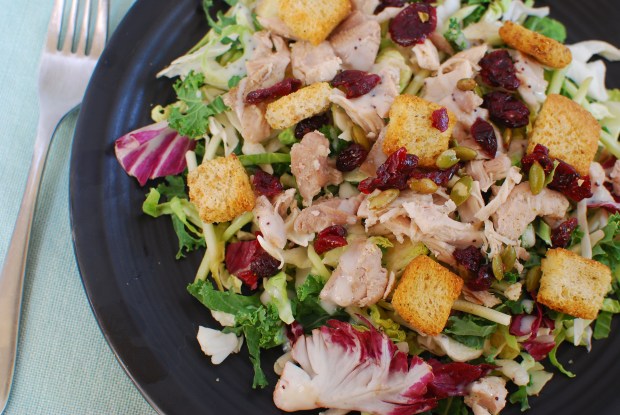
Almost every day I eat the exact same thing for lunch.  Bagged Salad.  They are so versatile and easy! They can be thrown together in under 5 mins and can easily be made ahead of time. I sometime make up 3 or 4 salads in mason jars to get me through the week.   I don’t always have time to prep some exotic exciting and nutritious lunch so I rely heavily on these salads.

dsc_0536

The chopped variety are hands down my favorites.  I find they tend to hold up well when prepped ahead of time then the more delicate salad greens, and they offer different veggie combinations, instead of the standard romaine lettuce.  The sweet kale and Brussels sprouts variety is my absolute favorite.  It comes with chopped (actually it mostly shredded) kale, Brussels sprouts and cabbage with a poppy dressing and dried cranberry and pumpkin seed topping.  The cruciferous veggies (kale, Brussels sprouts and cabbage) supply a healthy amount of vitamin a, c, k and folate.  Also, when eaten raw like in this salad, they are high in sulforaphane. Sulforaphane is a potent phytochemical that research has shown to have a positive effect on cancer and certain neurodegenerative diseases.

I’ve been able to find these salads at my local grocery store, Target and Costco.  All different brands, but comparable in taste and nutritional breakdown. Obviously the Costco sized one is the largest, but I’ve never had a problem finishing it before it has gone bad.

I just add in my own protein and croutons (because a salad MUST have crunch). Most nights, when making dinner, I cook an extra serving of protein (chicken breast or thighs, pork chops, steaks, etc.) and then I use the left over protein for the next day’s salad.   When assembling the salads, I tend to use a higher veggie to dressing/topping ratio then the bag recommends. Helping keep the fat and sugar content lower.  So if the bag says it contains 4 servings, for me that is usually 2-3 servings of veggies, and I just save the dressing and toppings for another salad.

dsc_0543

Mason jar salad for meal prep using bagged salad.

For meal prepping, layer these salads in a mason jar.  (Like I talked about here) First put the dressing in, then the salad mix (if using the hardier Brussel sprout and kale mix. If using more delicate greens, layer them last), next put in your protein, then top with the cranberries and seeds. Last but not least, put in whatever you need for crunch (I always add in 10 croutons).  Lunch is made! In under 5 minutes and if you meal prepped, it’s done for the week.


Holiday Survival

Here in the US, Thanksgiving is 3 days away and I have been hearing from a lot of people how nervous they are about this holiday season.  So, I thought I’d write up a quick post, with some tips on surviving the holiday season.

dsc_0502


  • If you do over indulge.  It is ok. Seriously, it’s ok!  Tomorrow is a new day. If you do gain a couple pounds, so what.  It’s not permanent.  Is it optimal? No, but it is not a reason to let it completely derail your overall progress.  So, stop fixating on your mistakes.
  • Holidays are about enjoying time with the ones we love. You do not have to be the person who brings their own food to Grandma’s dinner.  You can do the best with what is offered.  Load up the majority of your plate with meat and vegetables. Struggling with portion sizes for starchy carbs?  Use your hands.  1 cupped hand is 1 serving size for most women, and 2 cupped hands is a serving size for most men.
  • Eat a little something before you go to your holiday feast.  Showing up starving is a recipe of disaster.  It is incredibly difficult to make healthy choices and determine healthy portion sizes when we are very hungry.
  • Pick your poison. If you plan to have alcohol, be responsible.  Wine and clear liquor are your best choices.  (Watch those mixers for the liquor, they can add up! Water, club soda, lime juice and diet sodas are the best choices.) As you know alcohol can impair judgments, but that also means it makes it harder to make good decisions around food.  People are more likely to binge eat when they have been drinking.
  • Pumpkin pie your thing? Or maybe is mashed taters? Or stuffing?  Cool! Make sure you have some.  Seriously.  Do not deprive yourself, that can lead to binges later on. So, have a small slice of pie or put some gravy on those mashed taters.  And truly enjoy them.
  • Easy come easy go. If you do happen to gain weight, its ok!  Don’t freak. And absolutely do not let that be the reason you quit your healthy lifestyle.  That is where the real damage happens.
  • Move your body.  If you can get to the gym, great.  If not, go for walks. Wrestle with your nephews.  Just move your body.  There also are a lot of bodyweight based exercises out there that you can do in your own home with minimal equipment.  Just remember exercise IS NOT a punishment for what you ate.  So do not think, I have to run X miles to burn off this pie. Not only does not work this way, it is a horribly unhealthy relationship to have with food and exercise.
  • Try eating a little something before you go to your holiday feast.  Showing up starving is a recipe of disaster.  It is incredibly difficult to make healthy choices and determine healthy portion sizes when we are very hungry.  Just make sure it has some protein in it.
  • Try to stop eating before you are full. I know, it’s incredibly difficult on a holiday that is centered around stuffing ourselves.  But here is the thing, it takes at least 20 minutes for the signals in our guts to tell our brains that we are full and need to stop. So, technically you were full 20 minutes before you actually felt full!  In order to do that, eat slowly, taste every bite.  Put the fork down between bites.  If you stop eating and 20 minutes go by and you still feel hungry, then have some seconds or hit up the desserts.

If you do over indulge.  It is ok.  Tomorrow is a new day.  And remember food isn’t the bad guy. Eat the turkey. Have some pie.  Most importantly, enjoy the time with your loved ones.

If you are still feeling nervous about the holidays, shoot me an email at steph@stephhayes.com and we can work through this together.  For a limited time, I am offering an email only support for surviving the holidays.  From now till January 2nd, you can have daily email access to me (Monday through Friday).  I will answer any nutrition or mindset related questions and provide accountability.  My highest tier nutrition coaching can run over $200 a month, but this Holiday Survival will be only $25.


Workout Nutrition

What to eat before, during and after a workout gets a lot of hype. It can also be very confusing. The great thing is, our bodies are a heck of a lot smarter then we give them credit for. If you are an average healthy individual, who is just trying to look and feel better, then a balanced meal 2 hours before and within 2 hours after is all you need. Yup that is it. It’s that simple.  A meal consisting of a lean protein, healthy carbohydrate and a small amount healthy fat is all you need.

img_0567

This cherry-coconut smoothie topped with a little toasted coconut works well for a post or pre work out meal when strapped for time.

Now, if you are an athlete (either strength or endurance based), a very serious exerciser, a bodybuilder or you have a very specific physique goal then things will need to be a little more individualized. You will need a pre workout meal, a post workout meal and possibly a intra workout drink. The amount of carbs and protein in each would vary depending on your goals and body type, but generally you will need at least 20-30 grams of protein and 20-60 grams of carbs before and after.

What about the anabolic window all the broz at the gym talk about?  Don’t I have to slam a protein drink as soon as I finish my last exercise?! Recent research has shown that our bodies are smarter than that and the “window” is actually pretty big.  Again as long as we get protein and carbs in within 2 hours, we are good.  For an average person there is no reason to be slamming the protein shake as you walk out of the gym. A regular meal by the time you get home will suffice. Chicken and rice is one of my favorite post workout meals. (Or sushi, or fajitas. Sometimes tacos.)

Now, if you don’t have time to cook, or you don’t like eating a full meal after a workout out, a protein drink is perfect. Whey protein (from milk) tends to be the gold standard when it comes to powdered protein. There is also casein (another milk based protein), egg, and multiple different plant based ones (soy, pea, rice). There are even many different blends of all the different types. If you find one upsets your stomach, try a different one. It is not uncommon for some to be sensitive to certain types of powdered protein, but just because one bothers you doesn’t mean they all will.  When buying a protein powder make sure you keep an eye on the label, some brands have a lot of carbs or fat.  The additional carbs are not necessarily a problem; you just need to be aware so you know not to add in any more carbs.  I personally prefer low carb powders, that way I can add in my own carbs. I feel it gives me more flexibility.

What about fasting? Fasted cardio? Fasted strength training?

Now this one is VERY personal.  First, it comes down to do YOU like working out fasted? Most don’t, but if it works for you, then rock on with it.  I personally don’t recommend it, except as a last ditch measure used to get rid of those stubborn last pounds before an event.  Most people actually perform better in the gym when they are properly fueled before a workout, in turn they get a better workout.  This is, however, a very individualized thing.  There are a lot of things that should be addressed before you need to add in fasted workouts.  For example, how is your nutrition intake the rest of the day? How is your stress? What is your sleep like?  Only after all of those have been addressed should you even think about adding in fasted workouts.

The pre-workout meal is very similar to the post.  Optimally, 2-3 hours before your workout you should consume a regular balanced meal of carbs, proteins and a small amount of fat.  Now, what if you can’t eat that far in advance of your workout? Maybe you work out early in the AM or directly after work?  That’s fine.  If you have to eat less then 2 hours before your planned workout session, just reach for fast digesting foods.  By that I mean, keep the fat and the fiber content low.  The goal here is for the food to be easily digested and used for fuel instead of just sloshing around in your belly when you are working out. Smoothies work really well in this situation, or any lean meat and starchy carb.  Potatoes (sweet or white), rice, bread (if you eat it), rice cakes, ripe bananas are all examples of some quicker digesting carbohydrate choices.

Workout nutrition is not a one size fits all kind of thing.  It really depends on your goal and your nutritional intake the rest of the day. However, if your goal is to increase strength, enhance performance (this includes endurance sports), gain muscle mass (FYI if you want 6 pack abs or kick ass arms, then what you really want is more muscle) then work out nutrition is for you, but it doesn’t mean you have to drink a powdered protein supplement in the locker room.  For most, a regular balanced meals will suffice.  Just remember you have to feed the muscle to grow the muscle.


References

Aragon AA, S. B. (2013, Jan). Nutrient timing revisited:is there a post-excercise anabolic window? J Int Soc Sports Nutr, 10(1), 5.

Aragon AA, S. B. (2013, Dec 3). The effect of protein timing on muscle strength and hypertrophy: a meta-analysis. J Int Soc Sports Nutr., 10(1), 53.


Make Ahead Mason Jar Lunches

Healthy lunches are hard when you are busy or not at home during the day.  It’s just too easy to run to the café or a nearby restaurant to grab something quick. So this week I have been I I would experimenting with some healthy lunches that you can make ahead of time.

dsc_0347

Mason Jar Cobb Salad

Food prep in mason jars has been all the rage lately.  My breakfast overnight oats in mason jars is one of my most popular recipes.  So I thought I would test some of these mason jar salads out and see if they held up to the hype.  Overall I was fairly impressed.   You can make a bunch on one day, vary the ingredients so you don’t get bored and they keep for a couple days in the fridge.

They last about 3-5 days in the fridge (to be honest, I feel 5 days is kind of stretching it. I would stick closer to 3.) The trick in making them is how you layer them. The order of ingredients is very important to keep everything delicious and not soggy.

Below are the basic instructions to making your own jars. By following these basic instructions, you can easily come up with your own versions. These are incredibly customizable and just like the overnight oats you can easily adjust for your own tastes.  I have also included a couple recipes I tested out below, a Cobb salad and a basic salad with quinoa.  (I am also testing out a zucchini noodle and quinoa salad.  If it is a success look for that recipe in a few days!)

You need wide mouth quart size mason jars. The pint size it just too small. The regular mouth could work, but it is just easier and less messy with the wide mouth.

  1. Dressing goes on the bottom. This helps keep the more delicate or absorbable ingredients from getting soggy.  Generally, I use 1-2 tablespoons.  But if you are dressing fanatic you can add more. Can adjust to your personal taste preferences.
  2. Layer the ingredients. After the dressing add the heaviest NON ABSORBANT ingredients, like carrots or cucumbers. Next add in any grains, beans or pasta. Then add in any cheese or protein. Next add in any soft veggies or fruit, like cut strawberries or avocado (if you are making these more than 24 hrs. ahead of time I would wait and add these the day of.) On top of these place any nuts, seeds or light grains (like quinoa! I layered the quinoa above the dressing in my recipe below and it ended up soaking up most of the dressing, so make sure you layer it up higher.) Last but not least, add the salad greens. When adding your greens, gently push everything down.  You want it fairly compacted to keep the layers mixing.
  3. Add perishables the day off. Things like avocado or fruit (or maybe hard boiled eggs) need to be added the day of (or at most the day before) I found in my experiments that anything more than 24 hrs. the avocado started to brown and the fruit started to break down.
  4. When it is time to eat: shake, shake, shake, shake it off. (sorry couldn’t help myself there). But seriously you need to really shake it up good.  Then pour onto a large plate or bowl and enjoy.  Technically you could eat it straight from the jar, but every time I did that I ended up making a huge mess. That might be my problem though.


After constructing the salads, tightly cap and store in the fridge.  When transporting them, try to keep them as up right as possible.  That will keep the dressing from mixing with the other ingredients.


Mason Jar Cobb Salad

Makes 2 quart jars

  • 2 Tb your favorite Ranch (I used Bolthouse)
  • 2 strips bacon
  • 10 grape tomatoes
  • ¼ cup grated carrots
  • ¼ cup sliced cucumber
  • 2 ounces avocado, diced
  • 2 large hard-boiled eggs, diced
  • 4 ounces cooked or grilled chicken breast, diced
  • 1/2 ounce blue cheese
  • 4 cups chopped romaine lettuce

Layer everything in the mason jar in the order listed above.  Pack it tightly and secure lid.  Will last 24 hrs. as is, if making ahead of time add the avocado and egg in no more than 24 hrs. in advance.  When it’s time to eat, shake it up really well and pour on to large plate.

nutrition:

calories: 357 fat:18 carbs:18 Protein: 30


Quinoa salad Jar

  • 1 Tb Vinaigrette*
  • ½ cup cherry tomatoes
  • ¼ cup garbanzo beans
  • 1.5 oz. grilled chicken breast
  • ¼ cup cooked quinoa
  • 1 hard-boiled egg, chopped
  • 1 oz. avocado
  • 2 cups salad greens

Layer everything in the mason jar in the order listed above.  Pack it tightly and secure lid.  Will last 24 hrs. as is, if making ahead of time add the avocado and egg in no more than 24 hrs. in advance.  When it’s time to eat, shake it up really well and pour on to large plate.

(In the pictures, you’ll notice I layered the quinoa right above the dressing.  I don’t recommend doing this.  The quinoa absorbed a lot of the dressing and got soggy.  By layering it up higher, it will stay dry and fluffy) *I used a basic homemade vinaigrette.

Nutrition:

Calories: 380 Fat: 11 carbs:39 Protein: 32


Raising Healthy Eaters

Lately, I have been having a lot of people tell me that their children are the reason that they cannot eat healthy.  “I can’t eat that because my child won’t eat it” or “My children have to have the goldfish. And I just can’t control myself when those snacks are in the house”.  Part of our jobs as parents is to help our children become healthy eaters. Having two picky eaters myself, I know how unbelievably frustrating it can be to get them to eat healthy.  Now, while we cannot make our children be healthy eaters, but we can help them learn to make healthy decisions. Instead of letting our children keep the whole family from eating healthy, let’s make this a family affair and work on eating healthy together. Below are some tips for encouraging your kids to make better food choices and in turn eat better yourself.

img_0236

No Clean Plate Club

First off, absolutely DO NOT make your children finish their plate. I know how tempting it is to tell them they need to eat all their food, especially when you just spent the last hour making it.    When we force a child to finish their plate, however, they do not learn proper self-restraint around food. Researchers found preschoolers, whose parents forced them to clean their plates, did not learn self-control of food amounts.  One study showed that children who had been made to clean their plate at home, would request twice the amount of food when away from home.[1]  Trying to use force to get kids to do things sets us up for a power struggle. The last thing you want is to be part of a bartering match at the dinner table.  Anyone who has attempted to barter with a child knows it’s hard to win.  Instead, ask them to check in with themselves while reminding them once this meal is over, there will not be food again till the next snack or meal time.  For a younger child you might ask “Check in with your tummy.  Is it full? Remember once breakfast is over, we won’t have food again till we get home from the library.” They may get it wrong sometimes and not eat enough, but that is ok. That is how they will learn their own internal fullness cues.

No Bribes.

Do not use food bribes to get your child to eat other food.  None of the “I’ll give you dessert/ fruit if you eat all your whatever it is that you clearly don’t want to eat.” Instead just encourage them to taste the offending food.  Explain they do not have to eat it; they just have to taste it.  For young children you can ask them to lick or kiss the broccoli (or whatever the offending object might be).  Generally, the sillier you make it, they more likely they will give it a go. The more exposure they get to different foods (even ones they do not like now) the more likely they are to eat them later on.

Things do taste different to them.

Ever wondered why things you hated as a kid you like now?  Things really do taste different to children.  Children can have up to two times more taste buds then adults. This makes food taste stronger to them. Keep this in mind when you are flabbergasted that they don’t like your delicious dinner.  So be respectful, encourage them to taste it and leave it at that. Just because they do not like something now, doesn’t mean they will always dislike it. Keep offering the offending foods and one day you may be surprised.

Offer something they do like.

When you plan dinner, make sure it has at least 1 thing that everyone likes.  Include one food option that you know each child will eat. That might mean there is chicken for Betty, sweet potatoes for Sam, and peas for George, or whatever the dynamic in your house is. In our house this means there is always sweet potato or white potato, plain meat, a bland veggie and plenty of ketchup. Worst case scenario, there is at least one thing for each of them and everyone will eat something even if it isn’t the balanced perfect meal you envisioned. Remember though, keep offering different foods.  If they hate broccoli now, do not quit offering broccoli.  A lot of children do not like to try new or unfamiliar foods.  (Which is good thing, anthropomorphically it kept us surviving as a species. Imagine if our early ancestors’ children ate anything and everything they came across? Poisonous berries or mushrooms? Uncooked meat?) Kid’s preferences can change.  Just because they don’t like something today doesn’t mean they will continue to dislike it down the road. My kids commonly go through an “only meat phase”, or the ever painful “it has to be orange phase”, but these phases pass and they move on (sometimes to an even more annoying phase).  Just no fuss when they do turn up their nose at something, which is difficult when you just spent all afternoon making what was once their favorite food.

The Snack time hold out.

Some kids will learn that they are given more exciting foods at snack time and will hold out for them.  Ever notice your kid is never hungry at mealtimes but when snack time come around they can pack it away? The easiest fix for this? Get rid of the snacks. This is especially key if your child’s snacks are a trigger food for you.  (A trigger food is a food that you have a hard time controlling yourself around.) For the snack time, you can try offering what was left over from the prior meal. When they don’t finish a meal wrap it up and put it aside.  When “snack time” rolls around, offer them the previous meal.  Only do this, however, if you know the meal offered was something they like. You don’t want to try and trick your kids into eating foods they don’t like.

Kids will not starve themselves.

Studies show anywhere for 10 to 50% of parents believe their child is a picky eater, however majority of those children continue to grow and mature at a normal rate.[2] If, however you are worried there are red flags, go meet with your pediatrician express your concerns and have them show you your child’s growth curve.  Most likely your Dr. will reassure you that your child is still growing ok.

Keep them involved

img_0293

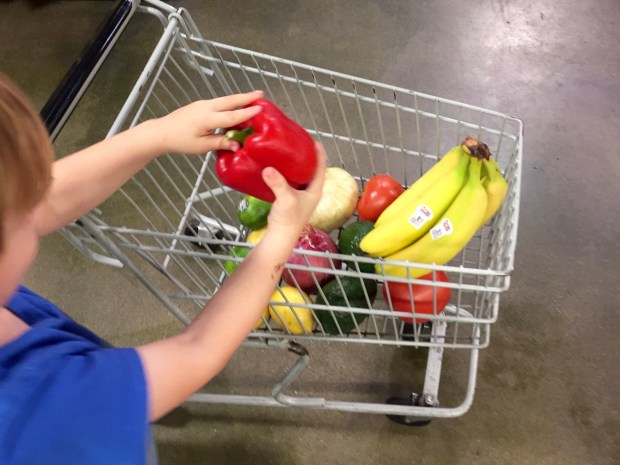
A brave shopping trip with my youngest and the “cart of doom”.

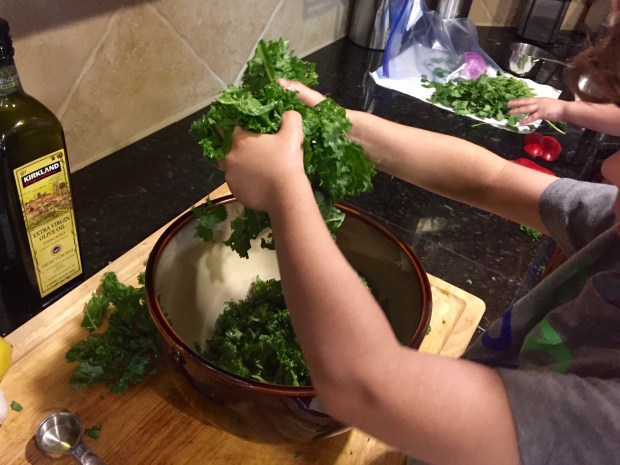
Let the kids help pick out the meals.  Ask them if they have any requests for meals. Then let them help make the meal.  They can assist you in finding the ingredients at the grocery store. I know, shopping with kids is a nightmare, so you might as well give them a job to do and keep them occupied. If you are feeling really patient, let they use those miniature kid carts (or as I call them the “the miniature carts of doom”) Also, let them assist in preparing the meal.  Depending on the age they can help up put together a salad, stir, add ingredients to a pan or bowl, or even start chopping food. Not only will they enjoy spending time with you, but they also are more likely to try the foods if they had a hand at helping to make them. Just stock up on a lot of paper towels and have the broom nearby.

img_0331

My kids helping make a salad for dinner.  They didn’t eat it much of it, but they tasted it.

Don’t let them see you sweat.

While they can’t really smell fear (or can they? Mine seem like they pick up on my apprehension quickly) they are watching us like a hawk. Children learn from observing us. They learn how much to eat, what to eat, if they should try new foods, and how fast they should eat.  Make sure you are setting the best example you can.

Food is not love.

Feeding our children is nurturing act, and the line between food and love can get blurred.  Sometimes, parents give children extra food and treats in order to obtain affection.  You may also see this when extended relatives, like Grandparents, visit. This can lead to a very unhealthy relationship with food. Both the child and the parent can become dependent on this relationship of giving extra food and treats to get more affection. Love is love. Food is not. Use empathy and affection to show love, not food and treats.

Healthy eating is a lifestyle not a diet. By involving the whole family everyone is more likely to succeed in the long run. Not only will you raise healthy eaters but you will maintain your goal of living a healthier lifestyle.  Plus, you are setting up your child with important food skills that will last them a lifetime. By involving everyone in the planning and prep, by not pushing or bribing, by respecting taste differences and offering different foods you are setting your children up with a lifetime of healthy habits.  When the whole family is on a mission together everyone is more likely to succeed.  It won’t always be easy, but really what about parenting is easy?

References

[1] Brian Wansink, P., Collin Payne, P., & Carolina Werle, P. (2008). Consequences of Belonging to the “Clean Plate Club”. Arch Pediatr Adolesc Med., 162(10):, 994-995.

Brown CL, P. M. (2016, Nov – Dec;). Maternal Concern for Child Undereating. Acad Pediatr., 777-782.

Christina Ong, K. Y. (2014, April). Managing the ‘picky eater’ dilemma. Singapore Med J.(55(4)), 184–190.

Robert A. Pretlow, R. J. (Br J Nutr., September). Similarities between obesity in pets and children: the addiction model. Br J Nutr., 116(5): , 944–949.

[2] Wright CM, P. K. (2007, october). How do toddler eating problems relate to their eating behavior, food preferences, and growth? 120(4, 1069-75.

Stuffed Peppers with Quinoa and Turkey

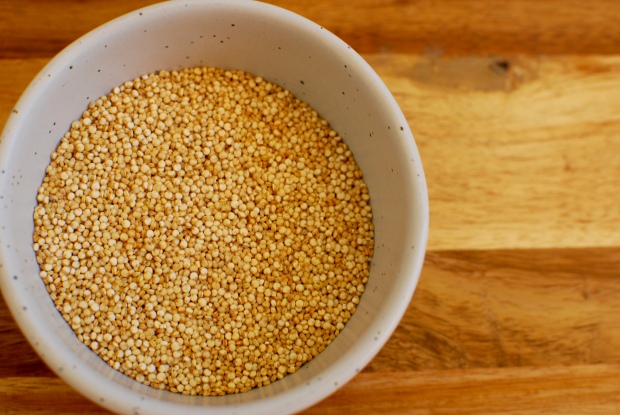
The standard rice in this dish is replaced with the superfood quinoa.  While we eat quinoa like a grain it really is a seed. It is closely related to beets and spinach. Keep in mind it is covered in a bitter substance called saponins, so when you prep it make sure when you give a good rinse it first. Quinoa is naturally gluten free and decent source of protein, calcium, potassium, zinc, iron and vitamin E, hence why it gets to be called a superfood.

dsc_0316

Superfood Quinoa

By dicing the veggies small they are less likely to be picked out or noticed by the pickier eaters.  Keep in mind, though, bell peppers are a strong flavor and young palates may not eat them.  But that is ok, there are still 2 servings of vegetables hiding on the inside.  If you or any of your eater do not like feta you can leave it out completely, or just sprinkle it on top of some of the peppers.

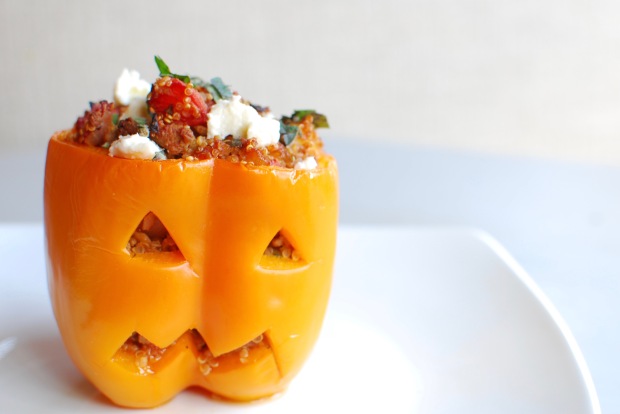
You can make this dish any time of year, but it is fun to turn them into pepper-o-lanterns around Halloween! If you do carve them, do it before you stuff them and keep the oepenings small.  You may want to plan some extra time to make this; it takes about 30 minutes to prep and then another 30 in the oven.  (You can prep it ahead of time, and throw it in the oven at later point.  Just note it may need a little extra cook time if the peppers are cold from the refrigerator.)

dsc_0305

Stuffed Pepper-O-Lantern!

Stuffed peppers with Turkey and Quinoa

½ cup quinoa

1 cup chicken broth

6 bell peppers (any color you prefer)

1 Tb olive oil

2 cloves garlic, minced

1 small onion, chopped

1 small zucchini, diced

1 lb ground turkey.

2 tb Worcestershire sauce

½ tsp salt

½ tsp pepper

1 can fire roasted crushed tomatoes

1 Tb fresh oregano chopped

3 oz feta crumbled

Heat oven to 350. Combine quinoa and chicken broth in a saucepan. Bring to a boil, reduce and simmer for 15 minutes.  Quinoa is cooked once all the liquid is absorbed and they looked unwound.

Cut the tops of the peppers and set them aside. Remove the seeds and any white ribbing inside (If you are carving them, do that now.  Keep the openings small, you don’t want all the insides to fall out when cooking). Place peppers in a baking dish.  Discard the stems from the peppers tops and dice.

Heat oil in a skillet over medium heat. When hot, add garlic, onion chopped pepper tops, and zucchini. Cook till soft about 10 minutes.

Add turkey, Worcestershire, salt and pepper. Cook until meat is browned, about 8 minutes.  Add tomatoes and oregano.  Stir in quinoa and half the feta (if mixing inside the peppers.  If you have picky eaters, skip this and just top some of the peppers with it)

Fill peppers with meat mixture, and top with feta.  Cook for 30 minutes. Makes 6 servings.


Nutrition for one pepper: 291 calories, 12 grams fat, 24 carbs, 21 protein


Meal Planning 101

What if I told you there is one very simple thing you can do that can help you stick to a healthier lifestyle? And it also saves money and time? There is, and it’s the act of planning out your meals for the week or any given period of time. I personally meal plan for Monday through Thursday and then again later in the week for Friday through Sunday.

img_0057

When you take the time to sit down and plan out your menu for the week, you are less likely to make last minute unhealthy choices.  It can also help with those impulse buys.  The sweets or salty treats are less likely to find their way into your cart when they are not on the list.  Also, by having your dinners planned out for the week, you are less likely to find yourself ordering pizza at the last minute because “OMG its 6 and what are we going to have for dinner?!” (Yes we have ALL been there! But the end goal is to limit the amount of times that has to happen).  Incorporating variety is easier when you’ve planned the meals out in advance. There is nothing worse than eating chicken breast for 5 days straight.  Blah!

img_0056

Where to begin:

  • First, pour yourself your favorite hot beverage (ok not a necessity but helpful and delicious).  Also if meal planning is something you dread, it can help to pair it with something you enjoy (for me that is a perfect cup of hot coffee, or maybe a matcha latte.)
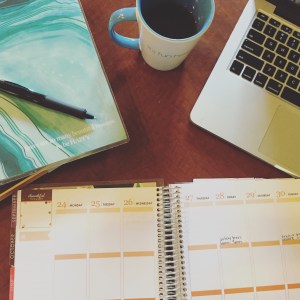
  • Grab your favorite pen, notebook and planner (if you are old school like me and still use a paper planner).
  • Next, you need to take stock of your kitchen.  I like to sit at my kitchen table when I plan. It helps to be close to the fridge and pantry for easy double checking on ingredients.
  • Find your inspiration. Grab your favorite cookbooks and open your browser to some cooking websites.  Great ones are Skinnytaste (her new cookbook, Fast and Slow, is pretty great), Clean Eating Magazine (and their website, however their website tends to be glitchy for me) and Cooking Light (both magazine and website).
  • Eating healthy can get expensive. Pull up your grocery stores sales flier online and check if there are any great sales (For example my store happened to have some good bargains on meat this week, so I planned my meals around them).
  • Pick your proteins.  It is helpful to first pick out your proteins and then plan your meals around them.  I usually like to try have 2-3 poultry based meals, 1 red meat, 1 pork, 1 fish/shellfish and 1 meatless.  That way we get a variety, no one gets bored and everyone’s favorite gets served.
  • If you load your carbohydrates around your workouts, it’s a good idea to figure out in advance what days you plan to work out so you can plan your carb heavy meals accordingly.
  • After you’ve picked out your recipes and meals, make a list of what you need and head off to the store.  I find it helpful when I write my list to keep everything in categories.  Since the produce section is the first section I hit, all the fruits and veggies are first.  Then it’s the meat counter, dairy section and anything I might need in the aisles.  That way I am not roaming up and down every aisle being tempted by the all the goodies.

Do you meal plan in advance? Any favorite tips of tricks?  If you are still confused, and don’t know what type of recipes to be looking for what you should be putting in your cart fill out a contact form and we can start working together.


Margherita Egg White Frittata

Recently I was gifted a very large bunch of basil and this recipe was born out of me desperately trying to come up with ways to use it before it went bad.  And I must say, it was a success.  I love basil, and there so many ways to use it other than pesto.  Basil isn’t just big on flavor; it also packs an amazingly healthy punch.  It is full of vitamin K, magnesium and potassium.  Also, research is showing the phytochemicals in basil can fight viruses, bacteria and inflammation.

dsc_0169

Now, to be honest, I did not test this recipe out on my children (I was hungry and not in the mood to share. Hey now, it happens.) But, I imagine most kids would like it.  I used all egg whites in the recipe, but feel free to sub in whole eggs (just note that will change the nutritional breakdown).

Due to the high protein content it is very filling while still being low in carbs (if you would like more carbs, some fresh fruit would go really well with it.) This frittata makes a great brunch or dinner.  Since does take a little attention and time, however, it is not the best choice for a rushed morning.


Margherita Egg White Frittata.

Serves 1

5 Oz Egg whites

3.5 Oz Grape tomatoes, sliced (any tomato will probably work here, this was just what I had on hand)

1 Oz Fresh mozzarella cheese

1 Tb Parmesan Cheese

2 Tb Basil, shredded


Place small skillet over medium heat and spritz with cooking oil.  Once hot, place tomato slices on skillet.  After a few minutes, pour egg whites over the tomatoes.  Once the sides begin to set, use a spatula to gently left the edges allowing the still liquid whites to run under.   As you lift the edge of the set egg, gently tip the pan so the uncooked egg can run underneath. Continue to do this till almost cooked through. It will still be a little raw in the middle.   Add mozzarella slices and over with a lid (keep an eye on it though, you don’t want it to burn).  Once the eggs are fully set turn over on to a plate and sprinkle with basil and parmesan cheese.  Enjoy!


Nutrition:

Calories: 192 Fat:6 Carbs:5 protein: 25