Chicken with strawberries, basil and goat cheese.

This protein packed recipe is  great when you are short on time. It is also family friendly.  My littles (age 5 and 2 love it).  The whole recipe takes only 30 minutes to throw together.  The combination of the strawberries, goat cheese and basil go really well together.  It’s easily adaptable to different family member’s tastes. For example, I leave the balsamic off my 2-year old’s plate, and I don’t add the goat cheese to the 5-year old’s.

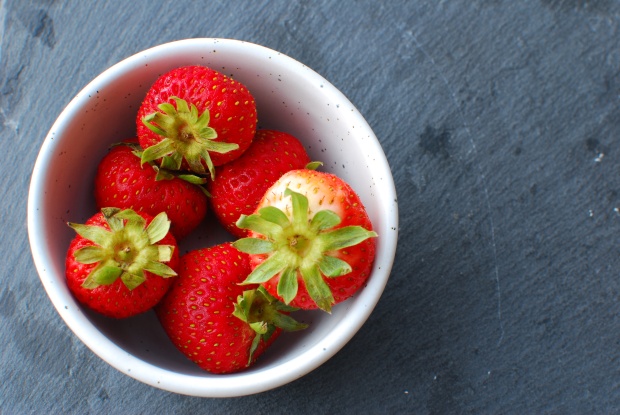
Strawberries are a good source of vitamin C, A and K.  Make sure you choose berries that are dry and firm.  Smaller berries tend to have more flavor then the larger ones. Typically, the larger berries contain more water so, their flavor is diluted.
dsc_0286

While boneless skinless chicken breasts are a great lean protein source they can be tough to cook.  They easily become chewy or dry.  This is a quick cooking method, so there is less time for them to dry out. Make sure you do not use more than 1 tablespoon of oil when cooking them though.  It just needs to be enough to lightly cover the bottom of the pan. We are pan frying these guys, not deep frying! The easiest and cleanest way to pound the chicken is to place it in a gallon zip lock, and smack the crap out of it with a heavy skillet or pan.  Great way to get your aggressions out and the ziplock keeps all the chicken germs from flying around your kitchen.
dsc_0200

The Ingredients

4 Chicken breast, boneless skinless.

1 Tb cooking oil. (I like coconut oil)

Salt and pepper

2 Lbs green beans, washed and trimmed

1 Tb oil

3 cloves garlic, minced

kosher salt

black pepper

16 strawberries, washed hulled and chopped

2 Tb basil, chopped

2 oz goat cheese crumbles (feta would be great here too)

Balsamic vinegar

Preheat oven to 400. Trim the green beans.  Toss with oil and salt. Place on a cookie sheet/pan. (Make sure they are dry 1st).  Roast for 20-25 mins, shaking the pan every 10-15 mins.  They are done when wrinkly and brown in spots.

Meanwhile, pound the chicken thin.  You’ll want them to be uniform in thickness.  Heat oil in skillet to medium high.  Season chicken with salt and pepper. Once oil is hot, place chicken in skillet and cooked undisturbed for 3- 5 mins per side.  Let sit for 5 minutes.  (If you are making all 4 breasts, you may need to cook 2 at a time.  Do not crowd them in the pan)

To serve: Place chicken breast on top of 1.5 cups green beans and top with ½ cup chopped strawberries, ½ oz crumbled goat cheese, a sprinkle of basil and a drizzle of balsamic vinegar.


Nutrition (with 1.5 cups green beans, 4 oz chicken and ½ oz goat cheese):

Calories:377 carbs:16  fat:14  protien:41
Protein. It’s what’s for breakfast, lunch and dinner.

People tend to over complicate nutrition.  (Heck we over complicate most things. Remember, keep it simple).  What if I told you there was one very simple thing you could do that would improve your body composition and improve your health? There is. It’s protein. The number one thing you can do to change the way your body looks and benefit your overall health is to eat more protein.  Eat it at every meal. Yes. Every single time.

dsc_0200

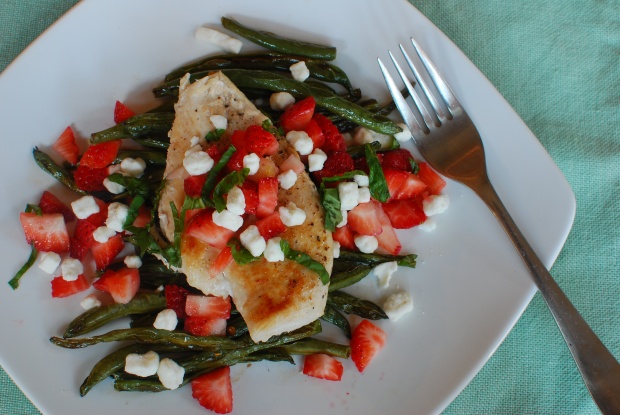
Chicken, strawberries and goat cheese on top of roasted green beans.


So, what is protein?

Protein is one of three main macronutrients that make up our food (fat and carbohydrates are the other two).  It is a molecule made up of amino acids. Amino acids are the building blocks for most of our body.  There are two types of amino acids, essential (our body cannot make them so we must get them from food) and non-essential (which our body can make).

Our bodies break down the protein from our foods into amino acids and we store them in our blood.  Our blood stream can then supply our body with aminos as needed.  Aminos make up important molecules like enzymes, hormones, neurotransmitters, and antibodies.  We need a pretty steady supply of amino acids, if our blood supply is low our body will take them from itself (like from our muscles).

What does protein do?

Protein helps support optimal health, including a good immune system (no one wants to be getting sick all the time), healthy metabolism (burn more calories), satiety (keeping you feeling full longer), weight management and athletic performance.

Studies show diets high in protein are associated with a lower BMI and lower waist circumference.  They have also shown to help increase HDL levels (the good cholesterol). High protein diets help support better weight management, weight loss and better body composition (less body fat and more muscle). They can also increase satiety and help keep you feeling full longer and intern help you eat less overall calories.  Age related sarcopenia (the loss of muscle as we age) can even be slowed or even prevented when older adults combine high protein diets with regular exercise.

dsc_0172

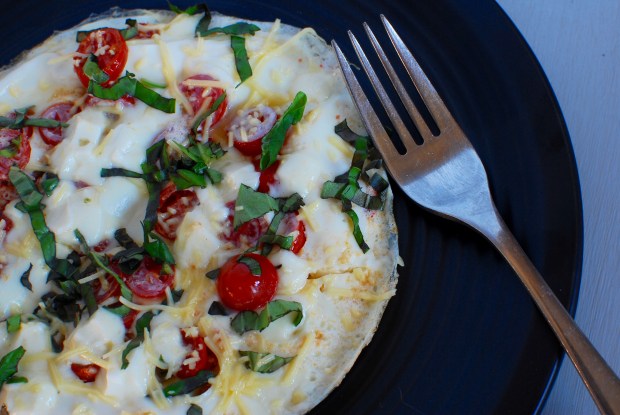
“Margherita” Egg white frittata

How much do I need?

Our current RDA set by Institute of Medicine states we need .8 grams/kg of body weight.  That comes out to 55 grams for a 150 Lb. person.  Now keep in mind, the RDAs were originally created to prevent disease (and death). Not create optimal health! Basically that is what you need to survive, not necessarily thrive.

A range of 1.2 -1.6 g/kg body weight are ideal for optimal health for healthy adults.  (That comes out to 81-109 grams for 150 Lb. person). Athletes and people undergoing intense training and exercise will need more, up to 2-2.2g/kg. Its is important they get plenty of protein both before and after exercise.

Aim to get protein, at least 20-35 grams, at every meal (and snack). Athletes and those that are very physically active will need to consume more.  Make sure you are choosing high quality lean protein sources.  Like chicken, turkey, lean pork, eggs, low fat dairy, beans, and lentils.  While I am a huge (huge!) fan of nuts and nut butters, it is not beneficial to think of them as great protein sources.  While one serving of peanut butter does have 8 grams of protein (28 calories from protein) it also has 16 grams of fat (135 calories from fat).  Protein bars can be good in a pinch, but it is always better to choose whole food sources when you can.  Same applies to protein powders.

fiction

But I heard too much protein is bad for my liver/kidneys?!

In normal, healthy people with functioning kidneys, there is no health risk associated with high protein diets.  People who already have damaged kidneys, however,  do need to eat a low protein diet.  That does not mean high protein diets will damage healthy kidneys.  Same goes for the liver. Those who already have liver disease or damage, will need a low protein diet.  Studies show that high protein diets (2.2 g/kg body weight) will not damage a healthy liver or kidneys.

The Bottom line

  • Get protein with every meal. Aim for at 20-35 grams per meal.
  • Choose lean healthy sources.
  • Vary your sources. Don’t forget about non meat options, like beans and lentils.
  • If you are an athlete or partake in intense activity, you may need more.
  • Make sure you are consuming protein around exercise.


Still feeling confused?  It’s okay.  Let’s work together to find out exactly how much protein and other nutrients you need to be eating.  Fill out the contact form for more information.

References

Phillips SM, Chevalier S, Leidy HJ. Protein “requirements” beyond the RDA: implications for optimizing health. Appl Physiol Nutr Metab. 2016 May; 41(5):565-72. doi: 10.1139/apnm-2015-0550.

Arentson-Lantz E, Clairmont S, Paddon-Jones D, Tremblay A, Elango R. Protein: A nutrient in focus. Appl Physiol Nutr Metab. 2015 Aug; 40(8):755-61. doi: 10.1139/apnm-2014-0530.

Rodriguez N. Introduction to Protein Summit 2.0: continued exploration of the impact of high-quality protein on optimal health. Am J Clin Nutr.  June 2015 vol. 101 no. 6 1317S-1319S.

Pasiakos S, Lieberman H, Fulgoni V. Higher-Protein Diets Are Associated with Higher HDL Cholesterol and Lower BMI and Waist Circumference in US Adults. J. Nutr. March 1, 2015 vol. 145 no. 3 605-614.

Fat is good

untitled-design

It is not secret around here that I am a huge nut butter fan.  Addict even.  Weekly my kids and I make homemade nut butters.  Peanut butter, almond butter (a chocolate coconut by my gal, Emma, over at Better With Cake is my all-time favorite!).  I am big fan of other fats too.  Avocados. Eggs. Coconut. Lard (Yes lard! Have you ever had potatoes roasted in duck fat? No? you haven’t lived till you have roasted potatoes in lard!)

Fats are good for you. Great even. Fats have gotten bit a bad rap.  Yes, there can be too much of a good thing (that applies to most things in life!) and some fats are better than others. Fats support your metabolism, hormone production, immunity and the absorption of other nutrients. Our brains, nervous system and cell membranes are all made up of fat.  In fact, our brain is actually 60% fat!

More important than your total intake of fats is the balance between the different types of fats, like polyunsaturated, monounsaturated and saturated fats.  In today’s average diet, it is easy for our fats to be out of balance. Typical diets tend to be very high in saturated and omega-6 polyunsaturated fats and low in monounsaturated and omega-3 polyunsaturated fat.

The Different Types of Fats

Monounsaturated

Monounsaturated fats are found in macadamias, pecans, almonds, cashews, pistachios, sesame seeds olives, olive oil, pumpkin seeds and avocados.

Polyunsaturated

Polyunsaturated fats are found in fish oil, hemp seeds, algae oils, safflower oil, peanuts, canola, walnuts, flax seeds, chia seeds.  There are 2 main types of polyunsaturated, omega-3 and omega-6.  Both are essential fatty acids, meaning our bodies cannot produce them. Generally, we get plenty of omega-6 in our diets but are lacking in Omega-3.  Omega-3s can be found in fish and algae oils and plant based sources like flax, hemp and chia. We typically cannot get all the benefits from the plant sources, so it is best to get it from marine sources. Typical diets tend to be very low in omega-3s, hence why hear a lot about supplementing with fish oil.  I am not a huge advocate for supplements, EXCEPT when it comes to fish oil.

Saturated

Even Saturated fats are not completely bad.  However, in the typical American diet (a diet high in processed foods and animal fat) we tend to get too much saturated fat in relation to the other fats. Saturated fat is found in animal fats (butter, meat) and tropical oils (coconut). We can make these fats healthier by choosing pasture raised meats, dairy and eggs. Newer research shows that saturated fat alone is not bad for our health, but it is when diets high in fat are combined with diets high in refined carbohydrates that there are problems.  [1] [2]

The only truly ugly fat, trans-fat

Trans-fat is found in margarine, fast foods, coffee creamers, microwave popcorn, frozen pizza and commercially baked goods.  Trans fat is made when a liquid fat is turned into a solid.  Like with margarine. These fats can raise our LDL (bad cholesterol) while lowering the HDL (good cholesterol), increase inflammation, contribute to insulin resistance. Research for the Harvard School of Health found that for “every 2% of calories from trans fats, their risk of heart disease rises by 23%” [3]

The great news is, we are aware of how bad trans fats are and they are being phased out of most of our foods.  However, until they are gone, we still need to keep an eye out for them.  The nutrition label may not state if a product contains trans-fat if it has less then 0.5 grams per serving, so look for the phrase “partially hydrogenated” on the ingredient list.

So what a guy or gal to do?

Don’t over think it. Remember keep it simple. Work on getting a balance of each type of fat.  Include nuts, seeds, fatty fish and pasture raised meats and eggs in your diet.  Avoid the processed fats typically found in fried foods, snack foods, chips etc.   Take a fish or algae oil supplement. Optimally you would want 1/3 of fat intake to come from each category saturated, monounsaturated and polyunsaturated (with most of that coming from omega 3s).  Right now there is a study for and against every type of fat.  Until more research is done, there is no need to avoid any one type (except for trans-fat) and just work on getting a balance of the different types.

References:

[1]Volek J., Forsythe C. The case for not restricting saturated fat on a low carbohydrate diet. Nutr Metab (Lond). 2005; 2: 21. Published online 2005 Aug 31.

[2]Siri-Torino P, Sun Q,  Hu F, and Krauss R. Saturated fat, carbohydrate, and cardiovascular disease. Am J Clin Nutr. 2010 Mar; 91(3): 502–509.

[3]Mozaffarian D, Katan MB, Ascherio A, Stampfer MJ, Willett WC. Trans fatty acids and cardiovascular disease. N Engl J Med. 2006 Apr 13;354(15):1601-13.


Tiny Balls of Energy

My oldest son (age 5) and I made these recently for our mom and son time.  We made 2 flavors, a “regular” kid friendly chocolate chip and a mom inspired pumpkin spice. I had wrongly assumed that the pumpkin spice ones would be all mine, however, they ended up being a hit with everyone.

dsc_0302

Dark Chocolate Chip and Pumpkin Spice Energy Balls

These balls are a delicious and portable snack, while still managing to pack a healthy punch.  The oats, flax and pumpkin are full of healthy carbs and fiber, that helps to keep you feeling satisfied and providing fuel for your day. Not to mention the pumpkin provides lots of micronutrients, like vitamins A, E, C, K and potassium and magnesium.

Now, don’t freak when you see the fat content. There is a healthy dose of monounsaturated and omega-3s (aka healthy fats) from the pumpkin seeds, flax, chia and nut butters. We need healthy fats in our diet. Look for an article later discussing the importance of healthy fats, but the short of it is: there are many body tissues (hello, our brain!!) made up of fat. (EDIT: updated article on Fat is here.) This makes the type of fat we consume pretty important.

Pair these bad boys them with some lean protein (maybe some cottage cheese? Or how about a latte with skim milk?) and you have a nice balanced snack.

The Pumpkin Spiced Energy Balls

  • 1 1/2 cups Oats (Use old fashioned or Rolled.  Do not use instant or quick)
  • 1 cup Pumpkin (look for pure pumpkin, not pie filling. I like Libby’s brand, it doesn’t taste as vegetal)
  • 2 Tb Unsweetened Shredded Coconut, toasted
  • 6 Tb Ground Flax Seeds*
  • 1/3 cup Maple syrup (Use the real stuff!)
  • 1/3 cup Natural Peanut Butter
  • 1 tbsp. Vanilla extract
  • 1 tbsp. Chia Seeds
  • 1/2 tsp Cinnamon
  • 1/2 tsp Pumpkin pie spice
  • 1/2 cup Dark Chocolate Chips
  • 1/2 cup Pumpkin Seeds

Mix all ingredients.  Then place in fridge for ½ hour.  After they have gotten nice and chill, roll into balls.  Place on a cookie sheet lined with parchment and freeze.  Once frozen, transfer them to whatever you plan to store them in (I use a freezer baggie)

I keep them in the freezer and defrost what we plan to eat. They defrost quickly and will keep for probably 1 week in the fridge.

Makes about 20-24 balls (depending on the size and how much sampling happens.) *Depending on the consistency of your Peanut butter you may need more or less ground flax.

Nutrition info:  Calories: 153 Fat:9 Carbs: 15  Protein:6

Pumpkin Spice not your thing? No problem! Try this regular chocolate chip variety.

Chocolate Chip Energy Balls

  • 1 cup Old Fashioned Oats (again no quick or instant here)
  • 2/3 cup Unsweetened Shredded Coconut, toasted
  • 1/2 cup Almond Butter
  • 1/3 cup Maple Syrup (use the real stuff!)
  • 1 Tb Vanilla Extract
  • 1/2 cup Flax Seed
  • 1/2 cup dark chocolate chip
  • 1 tbsp Chia Seed

Mix all ingredients.  Then place in fridge for ½ hour.  After they have gotten nice and chill, roll into balls.  Place on a cookie sheet lined with parchment and freeze.  Once frozen, you can transfer them to whatever you plan to store them in (I use a freezer baggie)

I keep them in the freezer and defrost what we plan to eat. They defrost quickly and will keep for probably 1 week in the fridge.

Makes about 20-24 balls (depending on the size and how much sampling happens.) *Depending on the consistency of your Peanut butter you may need more or less ground flax.

Nutrition: calories: 133 Fat:10 carbs:11 protein:3

Adapted from Clean Food Crush and Gimme Some Oven


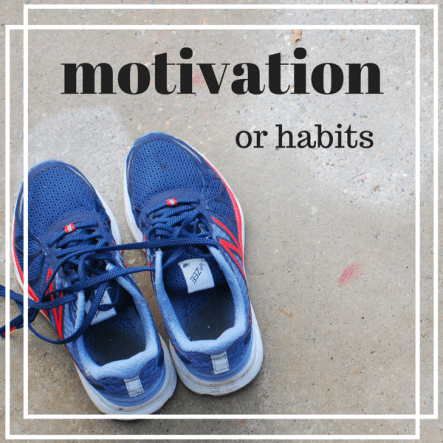
Motivation is a bunch of crap

Relying on motivation to achieve your goals is pointless.  It is an emotion.  It waxes and wanes. It’s high, it’s low. It’s there sometimes. Sometimes it’s not.  That is why you need to rely on habits, and not motivation, when trying to pursue health and fitness goals.

motivation-3

You wake up and ask yourself, “Do I want to go to the gym today?”  It happens to be day where you have low motivation.  You mind says “Heck no! Don’t go. Stay in bed” If you are relying on motivation alone, you won’t end up going. Now, if you made the habit of working out every MWF and today happens to be Wednesday.  Well you put on those gym clothes and you go to the gym.

Same applies for nutrition.  You look at the fridge; you think “I don’t want oatmeal today. I want a doughnut*” But if you grab that oatmeal, well then, you just said eff you to motivation and relied on a habit.

(*Don’t get me wrong.  Doughnuts are great and I don’t believe in bad foods.  I am all about moderation, but the problem resides in eating a doughnut (or whatever the food might be) every single time you feel like it. You need to look at how often doughnuts can fit into your diet and still reach your goal.  Say once a week? Once a month? As part of my coaching program, we would work together to find a healthy doughnut balance.)

Ever notice how much harder it is to get back on plan after a vacation?  It’s like you come back from vacation and all your motivation is in the toilet.  You assumed a week off would do you good and you’d come back and be ready to crush it. Instead you can’t drag your butt to the gym and your eating plan is out the window.  Or more like all your food is coming though the drive through window.  It is because your previously healthy habits are broken.

If you are relying purely on motivation to power you through changing your lifestyle, you are setting yourself up for failure.  You need to create the habit, and the lifestyle will follow.  First, pick one habit that is easy to implement.  Once you’ve mastered that habit (and by mastered I mean hit that bad boy consistently for at least 2 weeks) add in another habit. For example, you are going to ditch the doughnut drive through window on your way to work.  Instead you are going to make ahead a bunch of healthy breakfasts on Sunday to get you through the week (like these high protein overnight oats).  After 2 weeks of consistently hitting this habit, you can then add in another one.

dsc_0040

High protein peanut butter chocolate chip overnight oats.

Maybe you want to make a workout related habit. Try setting an alarm that tells you it’s gym time.  Say every MWF at 9 am, (or whatever your day and times might be) the alarm on your phone goes off and it says “gym time!”.  After 2 weeks of hitting they gym whenever you hear your alarm, you have now formed a new healthy habit! There is an actual study (1) in the Journal of Health Psychology that showed a direct correlation between an auditory noise and making a new habit stick.  Short of it is, those who heard a noise every time they began their new habit (Like an alarm telling them to hit the gym) were more likely to stick to their new habit.

So forget relying on motivation to power you through.  Pick a new healthy habit. Follow that bad boy for 2 weeks.  Then add in another.  Don’t go all gung-ho and add multiple habits at once, stick to one every two weeks.  Before you know it, you’ll have a whole new set of heathy habits and will be well on your way to a healthier lifestyle.  What are some healthy habits you have successfully implemented into your day? I’d love to hear them! Leave them or any questions below.


(1)Phillips, L. Alison; Gardner, Benjamin “Habitual exercise instigation (vs. execution) predicts healthy adults’ exercise frequency.” Health Psychology, Vol 35(1), Jan 2016, 69-77.